Two Months Without the Internet: I Don’t Miss It at All

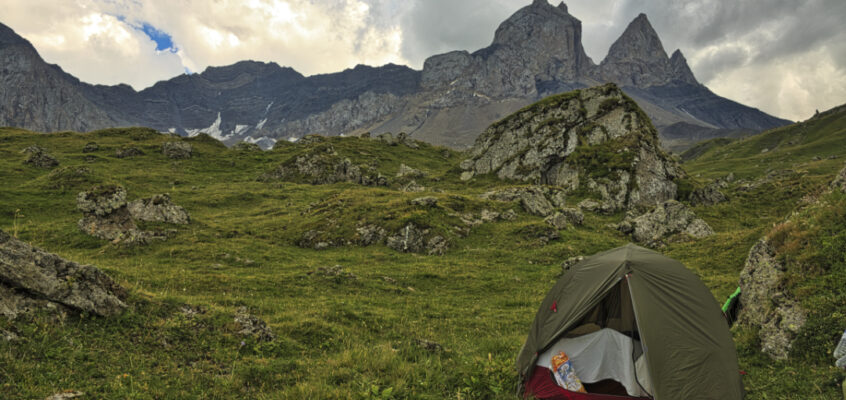
In a society where people seem unable to live without their smartphones, one person has decided to take a different path: cutting off the internet for two months. Surprisingly, the experience has not been difficult. In fact, the conclusion is clear: I don’t miss it at all. Instead of spending hours scrolling through social media, watching videos or checking notifications, I have rediscovered the simple pleasures of everyday life. I make new friends, talk to people face to face, go … Read More
Two Months Offline: My Backpack, My Tent, and a Much Better Life

posted in: Journal 0

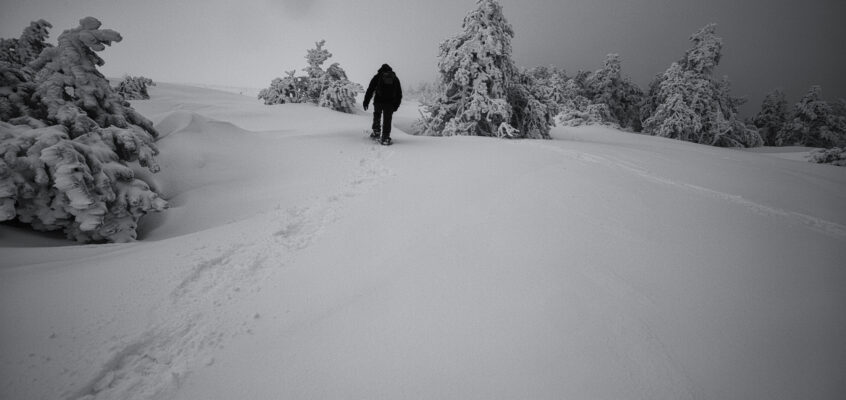
English / 日本語 / Français Two months. That’s how long I’ve been away from the internet. No scrolling, no endless notifications, no checking what everyone else is doing. And honestly? I don’t miss it. Not even a little. While the world keeps rushing from one screen to another, I’ve discovered something much simpler: life is a lot more fun with a backpack on my shoulders and a tent in my bag. I wake up with the sunrise instead of an … Read More

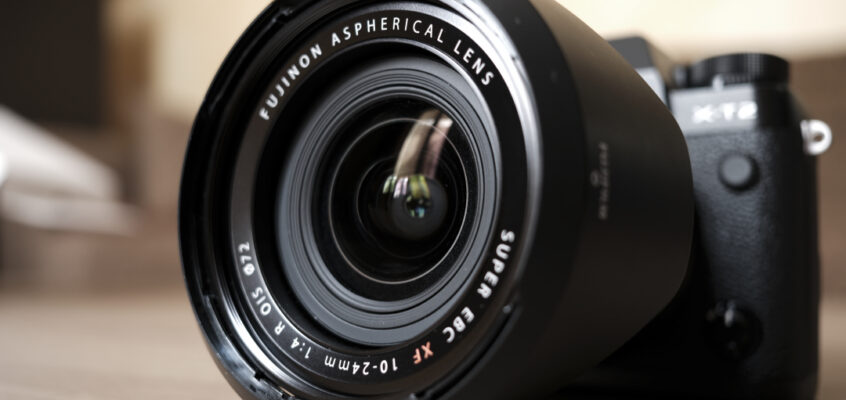
How Lenses Are Made (Optical Design & Formulas)

posted in: Journal 0

Modern lenses are not just shaped pieces of glass—they are the result of complex optical calculations designed to precisely control how light propagates through materials. 1. Refraction and Snell’s Law At the core of lens design is refraction, described by Snell’s Law : This equation governs how light bends when passing between materials with different refractive indices. Lens designers select glass types based on their refractive index (n) and dispersion (Abbe number). 2. Lens Maker’s Formula The shape of a … Read More

The influence of social media on photography

posted in: Journal 0

English / 日本語 / Français Over the past fifteen years, social networking services (SNS) have profoundly transformed photography, reshaping not only how images are shared, but also how they are created, perceived, and valued. Platforms such as Instagram, Facebook, and more recently TikTok have turned photography into a central form of everyday communication. One of the most significant changes is accessibility. With smartphones and social media, almost anyone can take and instantly share photographs with a global audience. Photography is … Read More

When the Forest Competes with the Selfie — Beauty, Desire, and the Psychology of Seeing

posted in: Journal 0

English / 日本語 / Français I have always loved nature. The slow unfolding of a mist over the mountains, the way the wind carries a scent I cannot name, the quiet insistence of trees standing unmoved through centuries — these are experiences that anchor me in a world larger than myself. Yet, I am equally enthralled by the roar of engines, the hum of a well-tuned motorcycle, the tactile precision of a car’s steering wheel beneath my hands. These two … Read More

Between Engines and Echoes of the Earth

posted in: Journal 0

English / 日本語 / Français There is a strange beauty in contradiction. I have always loved nature — the whispering forests, the infinite sea, the stillness of the mountains at dawn. Yet, I am equally fascinated by the roar of engines, the precision of mechanics, and the freedom that cars and motorcycles bring. These two passions might appear to belong to opposite worlds: one celebrates stillness, the other motion; one thrives in silence, the other in noise. But perhaps it … Read More

The Purpose of Photography: Capturing the World Around Us

English / 日本語 / Français In an age where smartphones, social media, and digital cameras are ubiquitous, photography has become not just a hobby but a means of expression, communication, and reflection. With every click of the shutter, millions of people around the world engage in an activity that allows them to capture the world around them—whether it’s the familiar faces of friends and family, the intricate design of a building, the wild beauty of nature, or the vibrant energy … Read More

Exploring Wildlife Photography with Pre-1995 Cameras

English / 日本語 / Français In the digital age, wildlife photography is often associated with high-speed autofocus, high-ISO sensors, and long telephoto lenses with built-in stabilization. However, long before the advent of digital cameras, photographers documented the natural world using mechanical film cameras. This article explores whether it’s still feasible to photograph wildlife—including macro subjects, animals, insects, and landscapes—using cameras made before 1995. It evaluates suitable gear, techniques, and photographic disciplines that align best with vintage equipment. Ultimately, it argues … Read More

Bridging Optics: The Promise and Philosophy of Universal Lens Adapters

English / 日本語 / Français Photography has always been a dance between light, glass, and mechanics. Each camera brand builds its own ecosystem: a unique mount, control protocols, lenses with specific focal lengths, autofocus behavior, and support for accessories. But what if those walls between ecosystems were more permeable? Mount adapters enable just that: they allow a lens from Brand A to be used on a body from Brand B. Philosophically, this opens up many possibilities—and raises many questions—about creativity, … Read More

The Invisible Pillars: Why the Smallest Creatures Must Be Valued

English / 日本語 / French In many ways, the greatest threats to life on Earth are not the roaring predators nor the towering trees, but the silent, often unseen organisms: insects, reptiles, amphibians, and other small beings. Their apparent insignificance belies their critical roles. The idea that “small” means “unimportant” is not only wrong—it is dangerous. Deepening the Moral, Ecological, and Practical Stakes Moral and Ethical Dimensions To value life ethically is to see value in diversity, not just in … Read More

1 2 3